
Blog Details
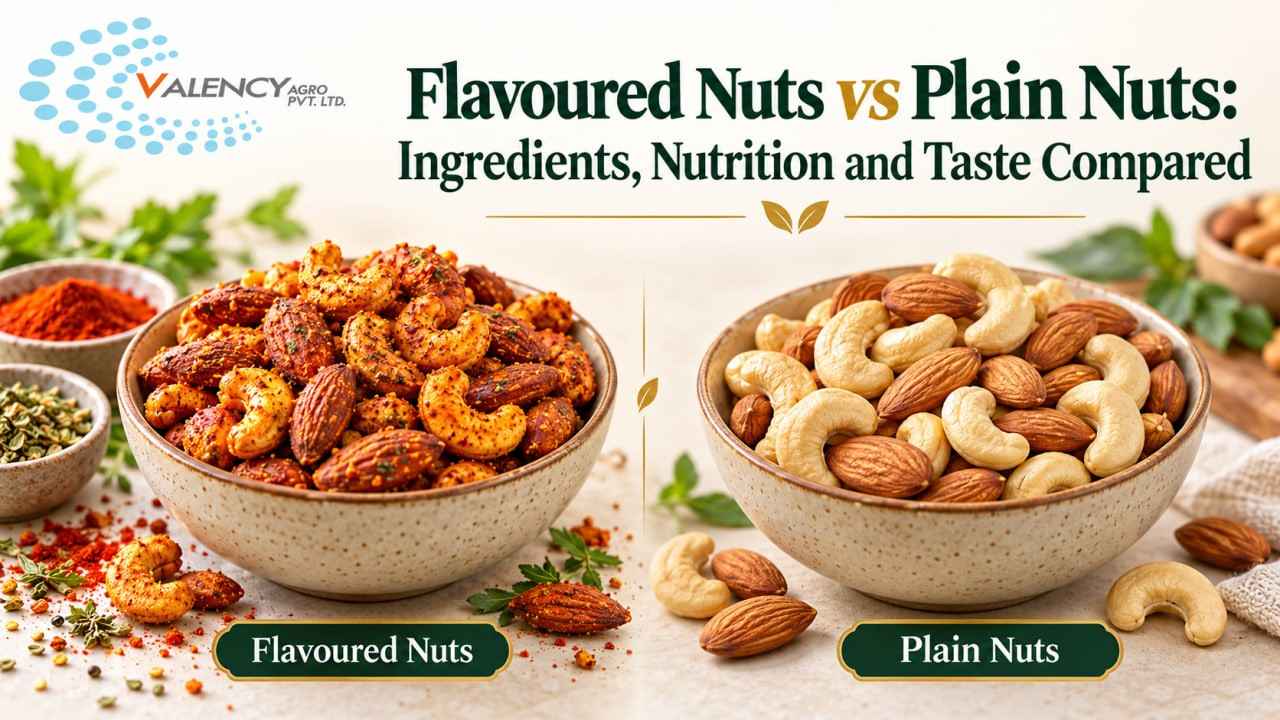
Flavoured Nuts vs Plain Nuts: Ingredients, Nutrition and Taste Compared
Walk down any snack aisle today, and the shelves tell a story. Plain almonds sit quietly next to jars of smoky, spicy, tangy and sweet varieties shouting for attention. Which is the better choice? The answer depends on what you want from your handful: pure nutrition, a satisfying snack, or a little fun. Valency Agro, a supplier of nuts and dry fruits, breaks down the differences so you can pick with confidence.
What counts as plain, what counts as flavoured
Plain nuts are simply the nut itself, raw or lightly roasted, sometimes with a pinch of salt. Nothing else is added.
The newer wave of Flavoured Nuts takes the same kernel and coats or seasons it. Roasting, glazing or dusting with spices, herbs, sugar or other ingredients gives it a distinct taste. Think peri peri cashews, honey roasted almonds or chilli-lime peanuts.
Ingredients: the biggest difference
Look at the label and the story becomes clear.
- Plain nuts: usually one ingredient. Almonds are almonds, cashews are cashews.
- Flavoured varieties: nuts plus seasoning, which may include salt, sugar, spices, natural flavourings, oil, herbs or acidity regulators.
- Roasting method: some are dry roasted, others roasted with oil. Oil can add richness and calories.
- Additives: a few products use preservatives or colours, while better made ones keep the list short and readable.
A simple rule works well: the shorter and more recognisable the ingredient list, the better.
Nutrition compared
Nuts are naturally rich in protein, fibre, healthy fats, vitamins and minerals. Almonds offer vitamin E, walnuts bring plant-based omega-3 fats, and cashews supply minerals such as magnesium and zinc. A small handful of any plain nut delivers steady energy and keeps hunger away.
Seasoning changes this picture in small ways:
- Calories: coating or roasting with oil and sugar can raise calories per serving.
- Sodium: salted and spicy versions can carry much more salt than plain nuts. This matters for people watching blood pressure.
- Sugar: glazed and sweet versions add sugar, which plain nuts do not contain.
- Core nutrients: protein, fibre and healthy fats largely stay the same, since the nut itself is unchanged.
Neither is “bad”. A lightly seasoned portion can fit comfortably into a balanced diet, but plain nuts offer more control, especially if you are managing weight, blood sugar or blood pressure.
Taste and texture
This is where flavoured varieties shine.
- Plain nuts: a natural, earthy sweetness with a clean crunch. Almonds taste mellow, walnuts slightly bitter, pistachios delicately sweet, and cashews creamy.
- Seasoned nuts: bold and layered. Smoky, tangy, spicy, sweet or savoury notes make snacking more exciting, and they pair easily with tea, drinks or movie nights.
- Texture: coatings can add extra crunch or a slightly sticky bite, depending on the method.
People who get bored of plain snacks often find flavours help them enjoy nuts more regularly, which is a real benefit.
Who should pick which?
- Plain nuts suit: people watching sodium or sugar, parents choosing snacks for children, and anyone using nuts in cooking, baking or breakfast bowls.
- Flavoured nuts suit: casual snackers, party platters, gifting and those who want something more exciting than a plain handful.
- A mix works for: most households. Keep plain nuts for everyday eating and seasoned ones for treats or guests.
Reading labels like a pro
- Check the ingredient list Fewer items is usually better.
- Look at sodium and sugar per serving, not per pack.
- Notice portion size, which is often small on the pack.
- See whether the oil used is named and sensible.
- Confirm the allergen information, especially if you share snacks with others.
Buying online
Shopping for Online Flavoured Nuts is convenient, but a few habits keep you safe. Pick brands that clearly list ingredients, batch dates and storage advice. Look for sealed, airtight packs, read recent customer reviews and compare net weights instead of just prices. Smaller sample packs let you try flavours before committing to a big order.
Storing them well
Nuts contain natural oils that can turn rancid with time, heat and moisture.
- Keep them in an airtight container.
- Store in a cool, dry place away from sunlight.
- Refrigerate in hot, humid weather.
- Use within the period suggested on the pack.
The balanced verdict
Plain nuts win on simplicity and nutritional control. Seasoned varieties win on fun and variety. Neither needs to be banished from your pantry. Choose plain when health goals come first and bring in flavours when you want something to look forward to. We at Valency Agro supply a range of nuts and dry fruits for retail and bulk buyers, and our team can help you find the right mix for your snacking, gifting or business needs.
FAQs
- Are seasoned nuts as healthy as plain nuts?
The nut itself still provides protein, fibre and healthy fats. However, coatings can add extra salt, sugar and oil, so plain nuts give you more control over your intake. - Which is better for weight management, plain or seasoned nuts?
Plain nuts are usually the safer pick, since they contain no added sugar or oil. A small handful is satisfying and keeps hunger in check. Seasoned versions can fit in occasionally if you watch the portion. - Do seasoned nuts contain more sodium?
Often, yes. Salted, spicy and tangy coatings can raise sodium noticeably, which matters for people watching blood pressure. Check the label for sodium per serving. - How much should one eat in a day?
A small handful, around 20 to 30 grams, is a sensible portion for most adults. People with specific health conditions should follow their doctor’s or dietitian’s advice. - Are seasoned nuts suitable for children?
Plain or very lightly seasoned nuts are better for kids. Very spicy or heavily salted ones are best avoided. Whole nuts can be a choking hazard for young children, so supervise and follow age guidance.