
Blog Details
Pistachios vs Almonds: Which Nut Is Healthier?
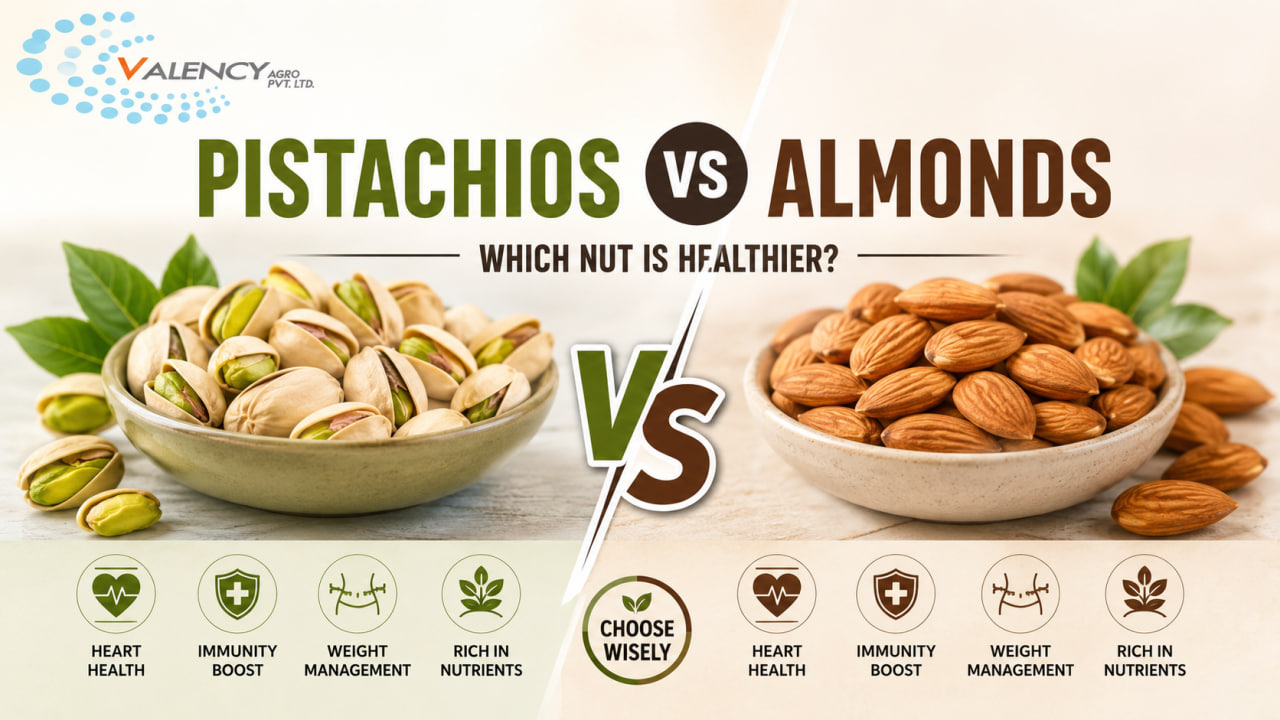
Short answer: neither of them wins over the other; they're both excellent, and the "better" one depends entirely on what you're optimising for. Heart health and versatility in cooking, almonds edge ahead. Portion control and eye health: pistachios take it. Here's the actual breakdown so you can decide based on your own goals instead of guessing.
Nutrition Comparison Table (per 1 oz / 28g serving)
|
Nutrient |
Almonds |
Pistachios |
|
Calories |
163 kcal |
159 kcal |
|
Protein |
6g |
6g |
|
Fibre |
3.5g |
3g |
|
Fat |
14 g (mostly monounsaturated) |
13 g (mono + polyunsaturated) |
|
Potassium |
200 mg |
290 mg (highest of any common nut) |
|
Vitamin E |
High |
Lower |
|
Standout compound |
Magnesium, calcium |
Lutein and zeaxanthin |
The calorie gap is negligible, and protein is essentially tied. The real differences show up in the details.
Health Benefits of Almonds
Almonds are one of the best plant sources of vitamin E, delivering a strong dose of this antioxidant in just a handful, along with meaningful magnesium and calcium. Their fat profile leans heavily monounsaturated, the same type found in olive oil, and this fat composition is part of why almonds carry a reputation as a heart-healthy snack. They're also a solid fibre source, which helps with sustained energy rather than a quick sugar crash.
Health Benefits of Pistachios
Pistachios pack more potassium per ounce than almost any other common nut, a mineral tied to healthy blood pressure and fluid balance in the body. They're also the only nut with a meaningful amount of lutein and zeaxanthin, plant compounds linked specifically to eye health, and their B vitamin content, particularly B6, supports energy metabolism. On top of that, eating them in-shell naturally slows down consumption, which research has actually shown reduces how much people eat in one sitting since visible empty shells work as a built-in portion cue.
Heart Health Angle
Both nuts show up favourably in cardiovascular research. Almonds get more attention here largely because of their fat profile, and regular almond consumption has been associated with modest improvements in cholesterol markers in several studies. Pistachios aren't far behind, their potassium and fibre combination is linked to better blood pressure regulation, which matters for anyone managing mild hypertension through diet.
Weight Management Considerations
Pistachios come with a built-in pacing mechanism: the shell. Cracking each one open slows down how fast you eat, and that natural friction helps a lot of people avoid mindless snacking, something shelled almonds don't offer since they're ready to eat by the handful. If portion control is genuinely a struggle, pistachios have a slight practical edge here. That said, pre-portioning almonds into small containers achieves much the same effect if shelling isn't your thing. When buying almonds specifically, choosing from established Almonds Brands in India helps ensure properly graded, evenly sized kernels rather than a mixed bag of inconsistent quality.
Which One Should You Actually Pick?
This isn't really a one-or-the-other decision. Rotating between both gives you a broader nutrient spread than fixating on just one. If heart health or kitchen versatility is the priority, almonds work well in both sweet and savoury dishes, curries included. If portion control or eye health matters more, pistachios deserve a regular spot, especially as an evening snack that takes a bit longer to finish. And whichever way you lean, sticking with reputable almond brands for your purchases makes the quality gap between what's on the label and what's actually in the bag noticeably smaller.
When it comes to sourcing quality nuts, not all suppliers are equal. Valency Agro focuses on proper grading, freshness, and consistent quality across every batch, whether it's almonds or raw cashews, and that sourcing transparency tends to show up directly in taste and shelf life.
FAQs
Are almonds or pistachios better for weight loss?
Neither is clearly better, calories are nearly identical per ounce, but pistachios in-shell may naturally slow eating and reduce portion size for some people.
Can diabetics eat almonds and pistachios daily?
Both are generally considered diabetes-friendly in moderation due to their low glycemic impact and fibre content, though anyone with diabetes should confirm portions with their doctor.
Which nut is better for skin and eye health?
Almonds support skin health through vitamin E, while pistachios support eye health through lutein and zeaxanthin, two compounds almonds don't contain in meaningful amounts.
How many almonds or pistachios should I eat per day?
Around one ounce, roughly 20-23 almonds or 45-49 pistachios, is the commonly recommended daily portion for most healthy adults.
The Bottom Line
Both nuts earn their reputation as smart snacking choices, and the real question isn't which is objectively superior; it's which fits your goals, your palate, and your patience for cracking shells. Keeping both in your pantry and rotating between them is probably the smartest move, since variety in nuts tends to serve overall nutrition better than fixating on just one.