
Blog Details
Roasted vs Seasoned vs Coated Nuts: What's Actually Different?
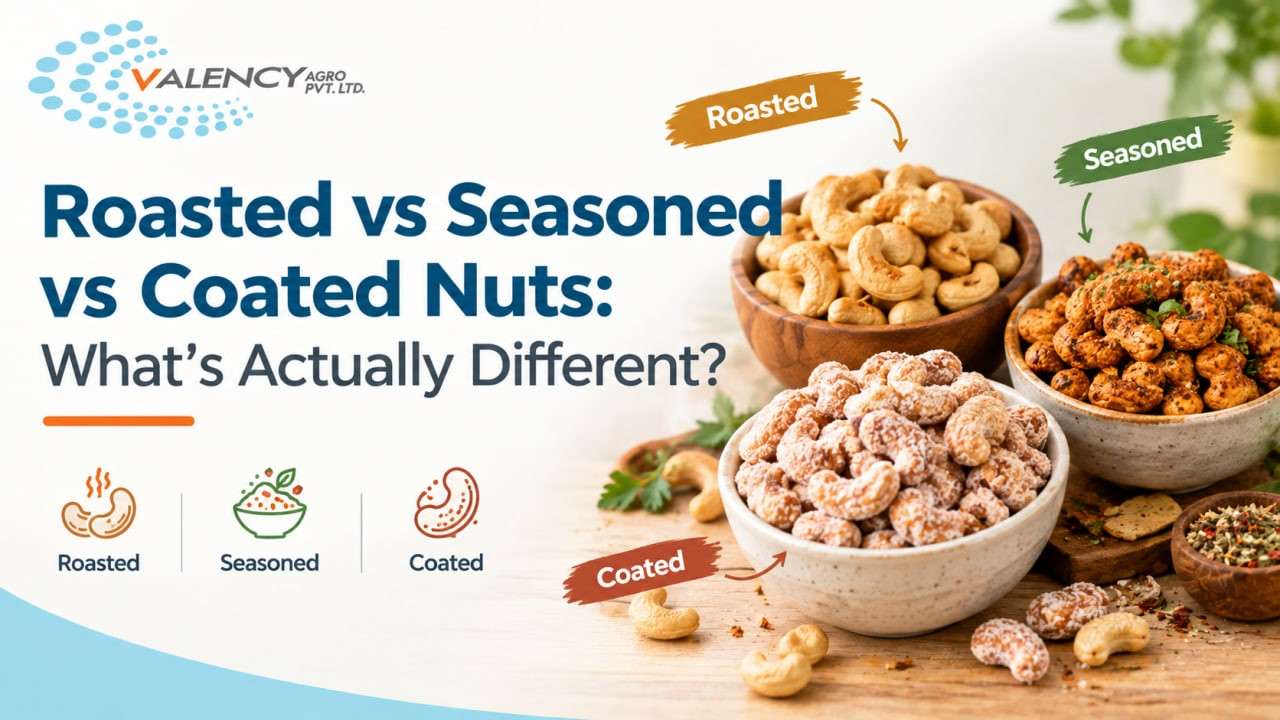
Walk down any snack aisle and you'll see it: roasted, seasoned, coated, or sometimes all three slapped on the same label. Most people assume they're basically the same nut with different marketing. They're not. The processing method changes texture, shelf life, calorie count, and honestly, how good the nut is for you.
If you're picking between plain roasted almonds and a spicy-coated cashew mix, here's what's actually going on under the hood.
Roasted Nuts: The Basics, Done Right
Roasting is heat, full stop. Dry roasting uses hot air or an oven; oil roasting adds a thin layer of fat before heating. Either way, nothing else gets added: no sugar, no batter, no seasoning packet.
- Brings out natural oils and deepens flavour
- Crisps the texture without added starch
- Keeps the ingredient list to basically one item, the nut
This is the closest you get to a "clean" nut snack. It's why nutritionists usually point here first.
Seasoned Nuts: Flavour Without the Shell
Seasoned nuts start roasted, then get a dry rub, like chilli powder, smoked paprika, garlic salt, or a masala blend. No wet coating, no batter armour.
- Flavour sits on the surface, not baked into a shell
- Usually lower in added sugar than coated versions
- Salt content can spike fast depending on the seasoning mix
Flavoured nuts in this category tend to strike a decent middle ground. You get taste without piling on extra calories.
Coated Nuts: The Indulgent Category
Coated nuts go furthest from the raw ingredient. A batter made of sugar, honey, chocolate, or a spiced flour mix is applied and then baked or fried to set it.
- Adds a crunchy or sticky outer shell
- Usually carries the highest sugar and calorie count of the three
- Best treated as an occasional snack, not a daily habit
Nutrition Comparison (per 30g serving, approximate)
|
Type |
Calories |
Added Sugar |
Sodium |
Fat |
|
Roasted |
170-180 kcal |
0g |
Low |
Naturally High, Unsaturated |
|
Seasoned |
175-190 kcal |
0-2g |
Moderate to High |
Similar to roasted |
|
Coated |
190-210 kcal |
5-15g |
Varies |
Slightly diluted by coating |
Figures vary by nut type and brand; always check the actual label.
Health Benefits, Section by Section
Heart health
Roasted and seasoned nuts retain most of their unsaturated fats, which are linked to better cholesterol profiles when eaten in moderation. Coated versions still carry this benefit, just diluted by the added sugar layer.
Blood sugar management
Plain roasted nuts have minimal impact on blood glucose. Coated nuts, especially honey or chocolate-covered ones, can cause a sharper spike due to added sugars.
Weight management
Portion control matters across all three, but roasted nuts offer the most calories per nutrient efficiency. Coated nuts are easier to overeat because the sweetness masks satiety cues.
Micronutrients
Magnesium, vitamin E, and healthy fats are present across all categories. Processing style doesn't strip these out, though excessive roasting temperatures can slightly reduce vitamin E content over time.
A Quick Health Claims Check
Not every "healthy" label on flavoured nuts holds up. Claims like "sugar-free coating" often mean sugar alcohols are used instead, not calorie-free, just differently processed. "Roasted in healthy oils" doesn't automatically mean low calorie either; oil roasting still adds fat. Always check the nutrition panel, not just the front label.
Buyers sourcing in bulk, retailers, gifting companies, or food brands often lean on established suppliers of Premium Flavoured Nuts like Valency Agro for consistent quality across roasted, seasoned, and coated lines, since consistency matters more at scale than it does for a single snack pack.
Frequently Asked Questions
Are roasted nuts healthier than raw nuts?
Not really. Roasting can slightly reduce some nutrients, but the difference is negligible for most people.
Which one lasts longest?
Dry roasted nuts tend to have the longest shelf life, since they contain no added moisture from sugar or oil coatings.
Can diabetics eat seasoned nuts?
Usually yes, in moderation seasoned nuts typically don't add sugar, unlike most coated varieties.
Is oil roasting worse than dry roasting?
Not "worse", just higher in calories per serving. The nutrient profile stays largely similar.