

Sabudana Vada Recipe for Navratri: Tips for a Crispy, Non-Sticky Snack
Best Valency Agro Recipes
Quick Healthy Recipes From The Experts
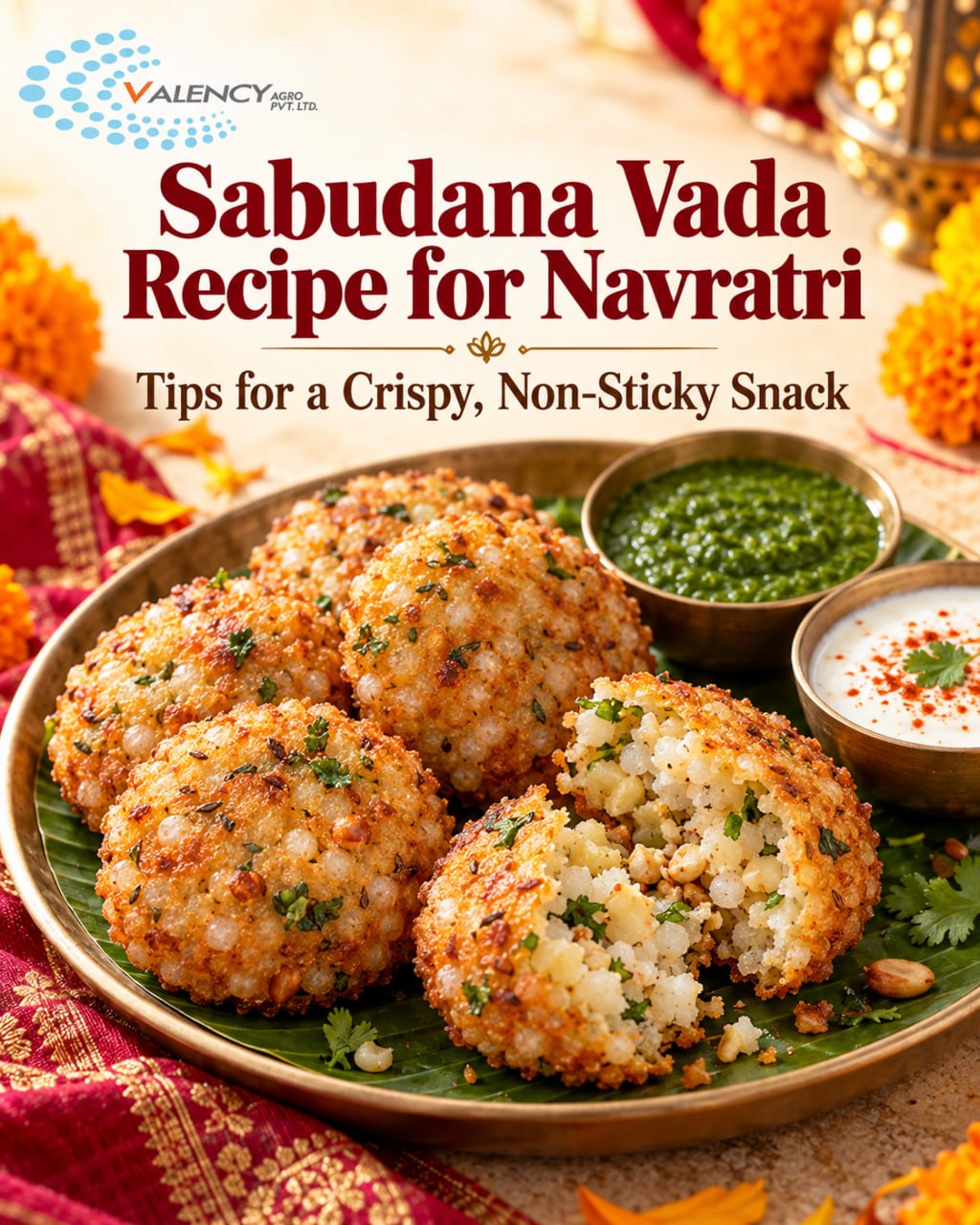
Sabudana Vada Recipe for Navratri: Tips for a Crispy, Non-Sticky Snack
A good sabudana vada has a crisp golden crust and a soft centre, with tender sabudana pearls and the crunch of roasted peanuts. This Sabudana Vada Recipe for Navratri uses potatoes, peanuts and sendha namak to make a savoury snack for your vrat thali.
The trick lies in preparing the sabudana correctly. Excess water makes the mixture sticky, while under-soaked pearls stay hard inside. With properly soaked sabudana, dry mashed potatoes and a few simple frying tips, you can prepare vadas that hold their shape and turn crisp.
Fasting practices vary between households, so use only the ingredients accepted in your family’s Navratri vrat.
Tips for Crispy, Non-Sticky Sabudana Vada
- Avoid excess soaking water: The pearls need to soften without becoming waterlogged.
- Check the centre of the pearls: Drain only after the sabudana mashes easily.
- Use cooled potatoes: Let cooked potatoes cool and their surface moisture dry before mashing.
- Keep the peanuts coarse: They add crunch without making the mixture oily.
- Maintain medium heat: Cool oil makes vadas greasy; very hot oil browns them too quickly.
- Avoid overcrowding: Too many vadas lower the oil temperature.
- Skip regular flour during vrat: Adjust the binding with potato or peanuts rather than adding maida or breadcrumbs.
Serving Tips
Serve the Sabudana Vada for Navratri freshly fried with plain curd or a chutney made using ingredients permitted in your vrat. Let them cool for a minute or two before eating, as the centre stays hot.
Refrigerate leftovers in a covered container within two hours and use within one to two days. Reheat in an oven or air fryer until hot and crisp; microwaving will soften the crust.